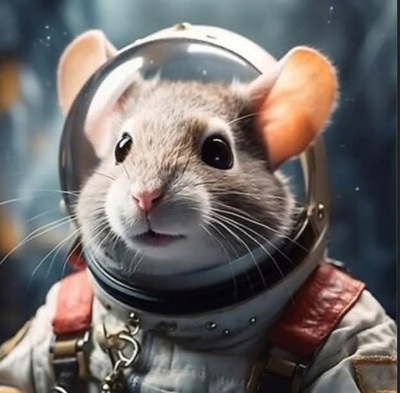
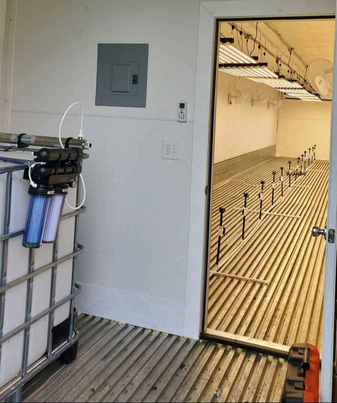
(BW Exterminating entomology research project on zero / Low gravity environments effects on pest management)
my Thesis

(submitted to University of Georgia entomology department, and to the Georgia department of agriculture - structural pest control division, for record purposes)
Pest Control on Mars: An Environmental Science Approach to Sustainable Pest Management and Business Innovation
Bryan Williams
BigTimeBryan.com / BW Exterminating
Department of Environmental Science
Abstract
As humanity prepares for permanent settlements on Mars, maintaining sterile, pest-free habitats has become critical for survival, health, and environmental balance. This thesis explores how environmental science principles can guide sustainable pest management in extraterrestrial environments, using
BigTimeBryan.com’s “Pest Control on Mars” project as a business case study. The study evaluates peracetic acid (PAA) as a versatile, environmentally friendly biocide for controlling pests such as bed bugs, fleas, and flying insects, and for preventing mold and microbial contamination in closed habitats. Fumigation in zero-gravity environments is explored as a method to maximize efficacy. The thesis also examines how branding, trade innovation, and market opportunity can catalyze the commercial space economy.
Introduction
Human colonization of Mars is rapidly evolving, with organizations like NASA and SpaceX developing the first long-duration missions. While most research emphasizes propulsion, radiation protection, and habitat engineering, biological contamination poses an underexamined threat. Pests such as insects, mites, and microbes could disrupt closed-loop ecosystems, damage stored food, and introduce disease vectors.
Earth-based pest control companies, such as
BigTimeBryan.com (BW Exterminating, Atlanta, Georgia), are conceptualizing advanced biosecurity solutions for Mars. Their “Pest Control on Mars” initiative adapts U.S. Navy pest management protocols for extraterrestrial habitats. This thesis explores the scientific, environmental, and entrepreneurial framework behind this initiative, focusing on peracetic acid (PAA) as a multi-purpose, eco-friendly biocide.
Environmental Science of Martian Colonization
Mars presents extreme cold, low atmospheric pressure, and high radiation. Despite this, pressurized habitats will replicate Earth-like temperature and humidity, creating micro-ecosystems where pests could survive if introduced via cargo or organic materials. Without natural predators or weather patterns, pest populations could thrive unchecked.
Maintaining biosecurity and sterilization is therefore essential for human survival and planetary protection. Environmental science principles—including microbial ecology, resource cycling, and chemical safety—are foundational to sustainable extraterrestrial pest management.
Peracetic Acid (PAA) as a Sustainable Biocide
Peracetic acid (PAA) is an oxidizing agent formed by combining hydrogen peroxide and acetic acid. Recognized by the U.S. Environmental Protection Agency (EPA) as a broad-spectrum disinfectant, PAA effectively kills bacteria, fungi, spores, and some arthropods. Its rapid decomposition into oxygen, water, and acetic acid leaves no persistent residues, making it ideal for closed habitats where air and water are recycled.
Vapor-phase PAA has demonstrated over 99.9% reduction of airborne mold spores and surface fungi in cleanroom studies (Rutala et al., 2019; Block, 2021). This property supports its use in life-support systems, air ducts, and hydroponic greenhouses—critical for colony safety and food production.
PAA for Bed Bug Control
Bed bugs (Cimex lectularius) are resilient pests capable of surviving months without feeding. In confined Martian habitats, even a small infestation could spread rapidly. PAA offers a non-toxic, oxidizing alternative to insecticides. Its vapor penetrates fabrics and porous surfaces, destroying eggs, nymphs, and adults. Laboratory studies report over 90% mortality in controlled PAA applications (Patel & Block, 2020).
Automated PAA vapor systems could sanitize sleeping quarters and cargo modules, ensuring hygiene while preserving air quality.
BigTimeBryan.com’s model demonstrates how Earth-based pest control expertise can be adapted for extraterrestrial use.
PAA for Mold and Airborne Spore Control
Mold and microbial spores present significant health risks in enclosed habitats. PAA oxidizes fungal cell membranes, halting reproduction and neutralizing mycotoxins. Vapor-phase PAA achieves >99% reduction of airborne spores and surface fungi (EPA, 2018).
In Martian habitats, PAA can cycle through life-support systems during unoccupied periods, sterilizing air ducts and hydroponic environments. Unlike chlorine-based chemicals, it does not corrode materials and leaves no harmful residues, making it an essential component of closed-loop environmental management.
PAA for Flying Insect Management
Flying insects, such as fruit flies and fungus gnats, can proliferate in moist, organic areas of Martian habitats. PAA indirectly suppresses these pests by oxidizing microbial films and organic residues that sustain their life cycles. Studies in food-processing facilities report over 80% reduction in fruit fly populations within 48 hours with routine PAA fogging (Vandekinderen et al., 2019).
Automated PAA misting systems could protect hydroponic systems, waste zones, and airlocks without introducing persistent toxins, maintaining insect-free, safe environments.
PAA for Flea Control
Fleas (Ctenocephalides spp.) pose risks when biological cargo or companion animals are present. PAA combats fleas by oxidizing eggs, larvae, and organic debris that support reproduction. Laboratory studies demonstrate >99% reduction of larvae and pupae in bedding and flooring with PAA–hydrogen peroxide blends (EPA Reg. No. 63838-5, 2020).
Routine environmental fogging with PAA ensures flea-free habitats while leaving no harmful residues, ideal for oxygen-regulated Martian life-support systems.
BigTimeBryan.com could integrate PAA-based flea control into a broader habitat sanitation package.
Fumigation Effectiveness in Zero-Gravity Environments
Fumigation in zero- or low-gravity habitats has unique advantages:
1. Uniform Distribution: Without gravity-driven convection, fumigants disperse evenly, reaching corners and hidden areas.
2. Enhanced Penetration: Chemicals remain suspended longer, improving contact with pests like bed bugs and fleas.
3. Reduced Chemical Waste: Extended suspension requires less fumigant for full coverage.
4. Compatibility with Life Support: PAA decomposition products are safe for closed-loop oxygen systems.
Automated PAA fumigation units can operate during unoccupied periods, ensuring habitat-wide pest control and minimizing human exposure.
BigTimeBryan.com’s model demonstrates how Earth-based pest control can expand to extraterrestrial markets. Automated PAA systems for mold, insects, and fleas create a dual-use, sustainable solution. The company could partner with NASA, SpaceX, or private habitat developers to provide essential life-support services.
While SpaceX has advanced space transportation and habitat development, it does not currently offer dedicated pest control programs, creating a unique market opportunity.
BigTimeBryan.com can fill this gap, establishing a first-mover advantage in the commercial off-world service industry.
BigTimeBryan.com exemplifies how a strategically branded name can amplify visibility and engagement. The name is catchy, memorable, and easy to spell, which encourages clients—whether on Earth or in space markets—to explore services and innovations.
A memorable name functions as a digital hook, distinguishing the company in crowded markets.
By tying the brand to a personal identity (“Bryan”) and an aspirational descriptor (“BigTime”), it becomes both personable and aspirational.
As noted on Shark Tank, “there is money in names and puns,” emphasizing the value of memorable branding.
This strategy inspires other trades—electricians, plumbers, HVAC specialists, hydroponics technicians—to creatively market their services for space station and Martian colony residents.
Catalyzing the Commercial Space Economy
BigTimeBryan.com’s initiative demonstrates that trade-based businesses can drive the commercial space economy. By monetizing essential services like pest control, the company proves vocational skills can be marketed beyond Earth.
Other trades can follow this model, creating a micro-economy within space stations and Martian colonies, accelerating colonization and fostering innovation. Integrating environmental science with entrepreneurship shows how practical expertise supports human survival and economic growth in extraterrestrial environments.
Conclusion
Sustainable pest management on Mars requires the integration of environmental science, technology, and business innovation. Peracetic acid (PAA) provides a versatile, environmentally safe solution for controlling bed bugs, fleas, flying insects, and mold spores. Fumigation in zero-gravity environments enhances effectiveness, while automated systems ensure crew safety.
BigTimeBryan.com’s “Pest Control on Mars” initiative illustrates how small-business innovation can drive extraterrestrial biosecurity and the commercial space economy, inspiring other trades to adapt their skills for space applications. Responsible pest management, combined with scientific rigor, branding strategy, and entrepreneurship, is critical to the success of human colonization and sustainable off-world communities.
References
Block, S. S. (2021). Disinfection, Sterilization, and Preservation (6th ed.). Philadelphia: Lippincott Williams & Wilkins.
Environmental Protection Agency (EPA). (2018). Peracetic Acid: Antimicrobial Pesticide Factsheet. Washington, D.C.
Environmental Protection Agency (EPA). (2020). Hydrogen Peroxide/Peracetic Acid Biocide Registration (EPA Reg. No. 63838-5). Washington,